I did most of the maintenance on my BMW X3 (F25) myself by the time it reached 500,000 km. It did not start that way. When I bought it, the previous owner’s unlimited-mileage maintenance package still had five years left, covering the oil and filters for roughly the first 180,000 km.
Once that ended, a dealer inspection at 260,000 km came with a ¥1.11 million repair estimate (roughly $6,960 at ¥160 per dollar). That pushed me much further into F25 DIY maintenance. Here are the jobs I kept doing over ten years, grouped by part of the car. The prices are what I paid at the time in Japan.
F25 DIY maintenance: oil every 30,000 km, 5.0 L each time
With my driving, the car called for an oil change about every 30,000 km. That long interval helped when I was covering around 50,000 km a year.
I bought Shell Helix Ultra Euro SN/C3 5W-30 in 20 L drums, sharing it with our G05 X5. Each F25 change took 5.0 L. Near the end, I also bought oil filters from AliExpress. One filter was ¥275, or ¥584 including shipping (about $4). I tried the cheapest one because the car was close to 500,000 km. In my hands, I could not tell it apart from the genuine filter.
This is the same filter shown in my 479,432 km oil-change article.
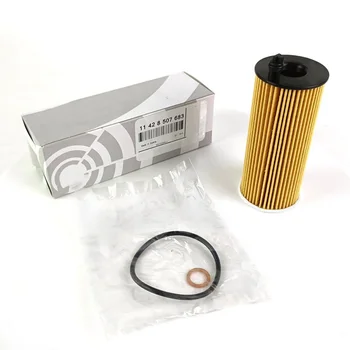
Doing the job myself, including the filter, kept a change below ¥8,000. My 479,432 km oil change and service-reset guide shows the parts plus the actual procedure.
Summer tyres lasted over 130,000 km
Tyres looked like the biggest expense when I was driving 50,000 km a year. They turned out better than I expected.
From run-flats to Michelin Primacy 4
The original tyres were 245/50R18 run-flats. I moved away from them because of the cost and the heavy steering feel. My first non-run-flat set was Nankang ECO-2+, about ¥40,000 for four. Fuel economy did not improve much, and the tread was getting low after roughly 65,000 km.
Next came Michelin Primacy 4, about ¥65,000 for four. I chose 235/55R18, a size outside the original specification, narrowing the tread from 245 to 235 in the hope of reducing rolling resistance and improving fuel economy.
Those tyres kept going. I fitted them in October 2019. After more than 130,000 km, they still had tread. They stayed on the car until I let it go at 500,000 km. The changed tyre size affected the speedometer: at a measured 100 km/h, the display read 103 km/h. I recorded the tread condition after 130,000 km.
Winter tyres went on early
For winter I moved down to 17-inch wheels. My first Pirelli Ice Asimmetrico wheel-and-tyre package cost about ¥130,000. It was quiet, inexpensive for the package, and returned better fuel economy than the original summer tyres. Later I bought the Plus successor for under ¥50,000 for four tyres.
I changed to winter tyres in November, while the weather was still mild enough to make the job comfortable. I put the summer set back on in June, before the rainy season, because I preferred its wet-road grip.
Brakes, sensors and filters
At 260,000 km, an inspection found uneven wear on the inner pad at the right front wheel. I replaced the brake pads. The discs followed at 280,000 km: the dealer’s quote was high, so I sourced the parts and paid a workshop to fit them.
Both times a brake-pad wear sensor broke or lost continuity, I changed the sensor myself. It was a relatively cheap part and a quicker job to handle at home.
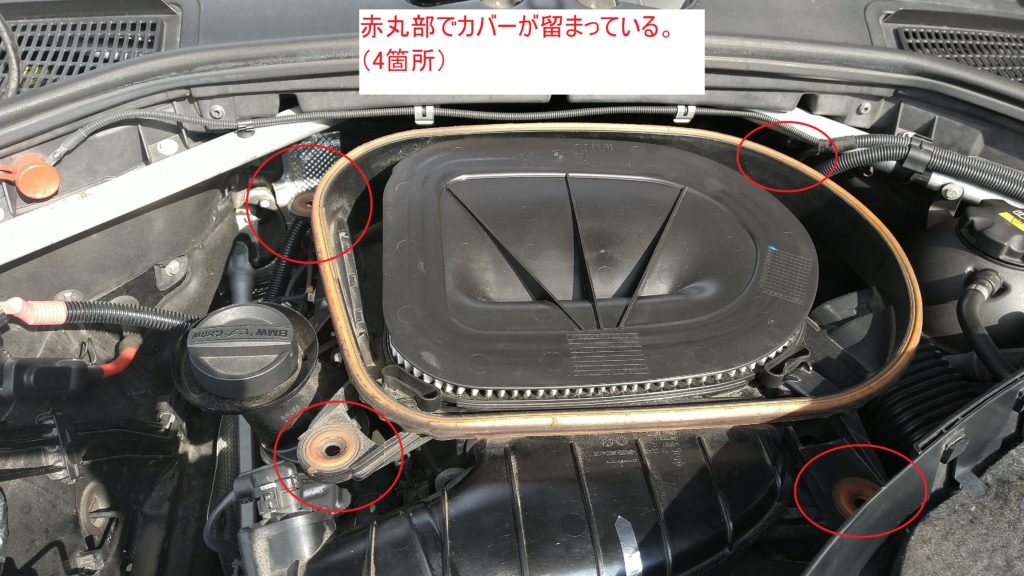
I kept replacing the engine air filter, the cabin filters for outside and recirculated air, and the wiper rubbers myself. Most required little in the way of tools. Later I bought some of them through AliExpress: a MANN cabin filter and wipers that cost ¥1,131. The Japanese site has my cabin-filter and engine-air-filter replacement records.
Japan’s user inspection cost around ¥40,000
After the five-year maintenance package ended, I took the F25 through Japan’s shaken vehicle inspection myself. These were my inspection payments:
- November 2021, 300,000 km: ¥42,210
- November 2023, 399,000 km: ¥39,950
- October 2025, 484,000 km: ¥39,950
Those amounts cover compulsory insurance, vehicle weight tax and inspection fees, not the maintenance needed to keep the car roadworthy. In years when I also had a BMW dealer carry out a 12-month check, that added around ¥30,000. I decided separately which repair work to do.
I worried about the headlight aim check because I had fitted inexpensive LED bulbs. Even at the last inspection, in the car’s 11th year, it passed on the first attempt without adjustment. The 2025 inspection record is on the Japanese site.
What doing it myself changed
Looking back at 500,000 km, tyres and oil were the main recurring expenses. Their cost felt more tied to distance than to the BMW badge. The long oil interval also meant fewer changes than I had expected.
The biggest benefit of doing the work myself was being able to deal with a problem when I noticed it, without waiting for a workshop slot. My next car is electric, so there will be no engine oil or air filter to change. I expect different consumables to take their place, and I will write about them as they come up.
This article is also available in Japanese.