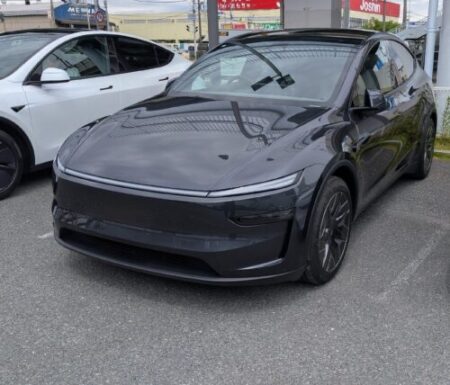
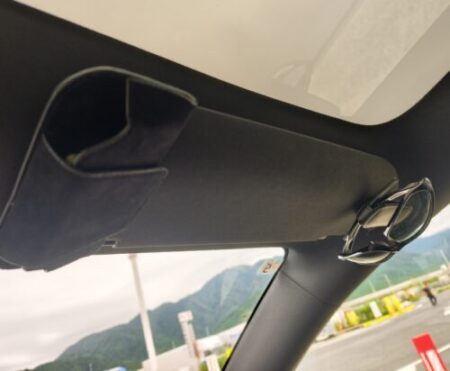
On the way home from work I glanced at the dash and saw 9,999 km sitting there. My Tesla Model YL was delivered on 23 May 2026, and exactly two months later, on 23 July, it crossed 10,000 km, which makes this a good moment to look at real Model YL efficiency.
I got to watch the digit roll over, which felt like a small event in itself.
Below are the numbers I measured over those two months, plus what the same distance would have cost me in my old BMW X3 diesel.
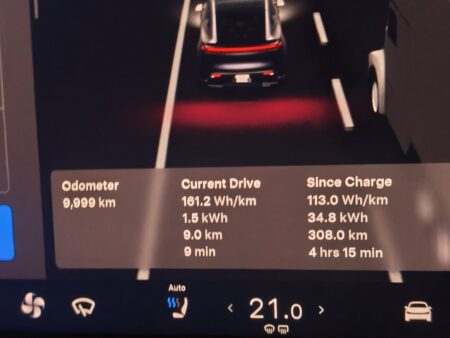
Exactly 10,000 km in Two Months
I caught the change from 9,999 to 10,000 on the centre display.
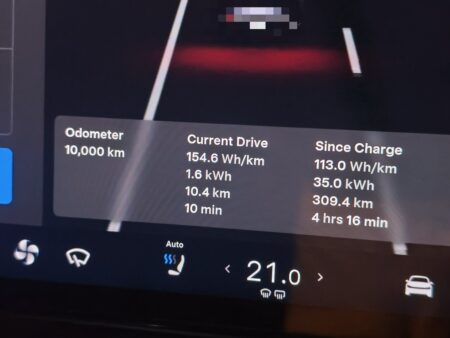
Four zeros in a row is not something you get to see very often in one car.
I filmed the rollover too (no sound).
That Works Out to 5,000 km a Month
From 23 May to 23 July is 61 days, so 10,000 km means roughly 164 km a day, or about 5,000 km a month.
Keep that up for a year and it is 60,000 km. The average passenger car in Japan covers something like 10,000 km a year, so I am running at about six times the national average.
Coming from a BMW X3 that I took to 500,000 km, the pace itself is not a shock. What is new is doing it on electricity.
At the 50-day mark my one-month inspection showed 7,778 km, so I added another 2,200 km in the eleven days after that. If you want the starting point of all this, it is in my Model YL delivery day post.
Model YL Efficiency Measured: 127 Wh/km
I never reset Trip B after delivery, so it has quietly become a lifetime record.
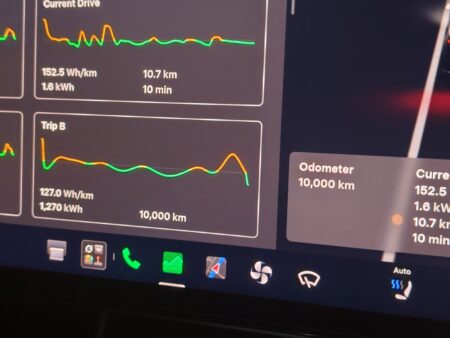
At the 10,000 km mark Trip B read 127.0 Wh/km average, 1,270 kWh consumed. The distance figure lined up with the energy figure almost too neatly.
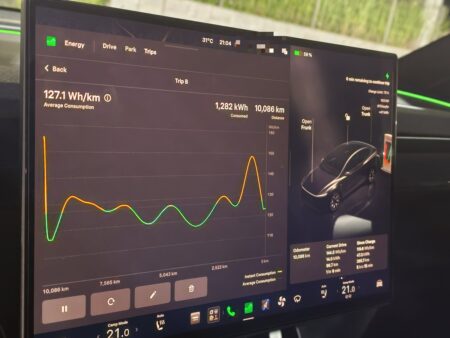
Later the same evening, at 10,086 km, it showed 127.1 Wh/km with 1,282 kWh. Two solid months hovering around 127 Wh/km.
In the other direction that is roughly 7.9 km/kWh. For a two-tonne L-size SUV I think that is a genuinely good number.
Charged Energy Was 1,517 kWh, With Roughly 15% Lost
The Tesla app tells a slightly different story. Over the same period I put 1,517 kWh into the car.
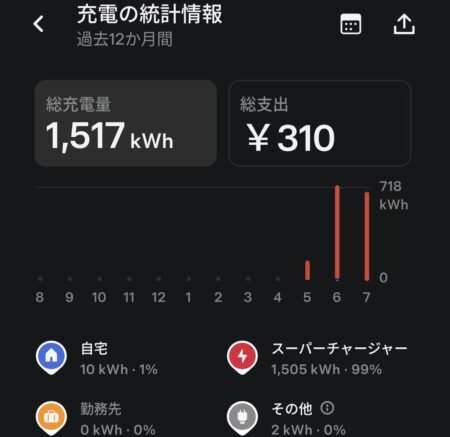
The app is in Japanese. The headings read: “Charging statistics / Past 12 months / Total charged / Total spend”, then the breakdown rows “Supercharger / Home / Work / Other”.
Superchargers accounted for 1,505 kWh, which is 99% of everything. Home was 10 kWh, other chargers 2 kWh. Essentially all of it came from Tesla’s Supercharger network.
So: 1,282 kWh reached the wheels out of 1,517 kWh drawn. The missing 235 kWh went to charging losses, battery conditioning while parked, climate control, all the usual overhead.
That means 84.5% of the energy did useful work, with about 15% lost. Measured at the plug rather than at the wheels, real consumption is closer to 150 Wh/km.
Your wallet cares about the plug figure, so the cost maths below uses 1,517 kWh.
Fuel Cost Versus My Old X3 Diesel
This is the part I actually wanted to write.
My old BMW X3 (F25) diesel returned about 17 km/L in real use. At ¥145/L (approx. $0.97) for diesel, 10,000 km needs roughly 588.2 L, which comes to about ¥85,294 (approx. $570).
So every two months, ¥85,294 evaporated as fuel. Scale that to 60,000 km a year and it is about ¥510,000 (approx. $3,400).
Three Years of Free Supercharging Means ¥0 So Far
The Model YL came with three years of free Supercharging as a purchase bonus.
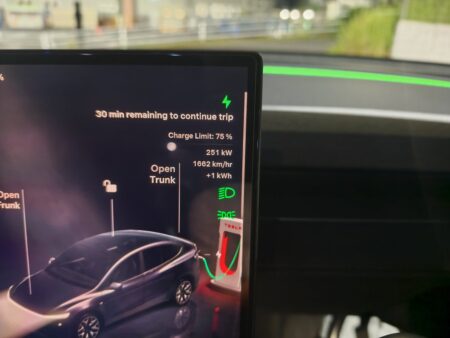
I do have charging at home, but as the statistics above show, I barely use it.
Which means my actual spend on energy for these 10,000 km was zero.
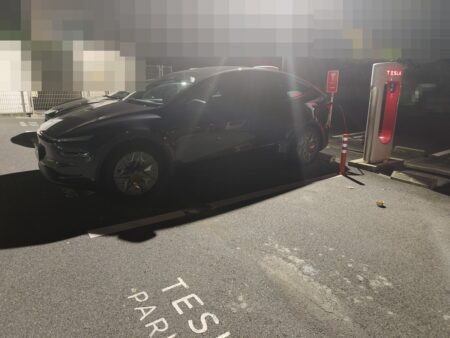
A stretch of driving that would have burned ¥85,294 of diesel cost me nothing at all. That lands harder than I expected it to.
Even on Home Night Rates It Would Be About ¥30,000
The free period runs out after three years, so it is worth knowing what comes next.
At a night-time home rate of ¥20/kWh, 1,517 kWh works out to about ¥30,340 (approx. $200) per 10,000 km.
Against ¥85,294 of diesel, that is a bit over a third. Even with no free charging at all, my energy bill drops to roughly one third.
At 60,000 km a year: about ¥510,000 of diesel versus about ¥180,000 (approx. $1,200) of electricity.
The more you drive, the more an EV pays you back. Two months in, I can feel that rather than just believe it.
Warranty: 4 Years or 80,000 km, Whichever Comes First
There is a downside to covering this much ground.
Tesla’s basic new vehicle warranty runs four years or 80,000 km, whichever arrives first.
Two months in, I have already used one eighth of it.
At this rate I hit 80,000 km in about 16 months, so roughly a year and four months after delivery. The four-year clock would still have two years eight months left on it when the cover expires.
Why I Am Not Buying the Extension
Tesla sells an extension that adds 40,000 km. I am not planning to take it.
Two reasons. First, 40,000 km buys me about eight more months at my pace. Second, the price is high enough that eight months of cover does not feel worth it.
I am not dismissing warranties in general. I have already had a map light replaced under warranty two months in, so I know exactly how useful the cover is. Having the Kyoto Shijo Service Center nearby helps too.
It is the price per month of extension that puts me off, not the idea.
If I could ask for one thing, it would be a looser distance cap. Treating a 10,000 km-a-year driver the same as a 60,000 km-a-year driver under one “4 years / 80,000 km” rule is rough on the second group.
Summary
Where things stand at two months, 10,000 km:
- 10,000 km in 61 days, about 5,000 km a month (60,000 km a year, roughly six times the national average)
- Average 127.1 Wh/km (about 7.9 km/kWh), 1,282 kWh to the wheels
- 1,517 kWh drawn from chargers, so about 15% lost
- The same distance in the X3 diesel (17 km/L at ¥145/L) would have been about ¥85,294
- Free Supercharging for three years means I have spent ¥0
- Even at ¥20/kWh at home it would be about ¥30,340, roughly a third of the diesel bill
- The 4-year / 80,000 km warranty runs out on distance in about 16 months
Model YL efficiency, running cost: both landed where I hoped they would before I bought the car.
Two months was enough to confirm that high-mileage drivers get the biggest win from going electric.
What I am watching now is battery degradation, because I run almost exclusively on DC fast charging. And with 16 months of warranty distance left, I intend to surface every fault this car has before it runs out.
The charging side of those numbers gets its own write-up: the Model YL held 251 kW down to 17%.



This article is also available in Japanese.