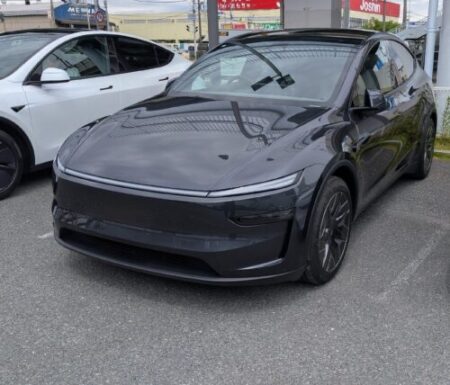
Fifty days after delivery, my Model YL had already covered 7,778 km, so it was time for the free 1-month inspection at the Tesla Kyoto service center. Even by my standards that is a lot of driving.
This was my first ever service visit with the car. The site is officially the Kyoto Express Service Center, but locally everyone calls it Kyoto Shijo.
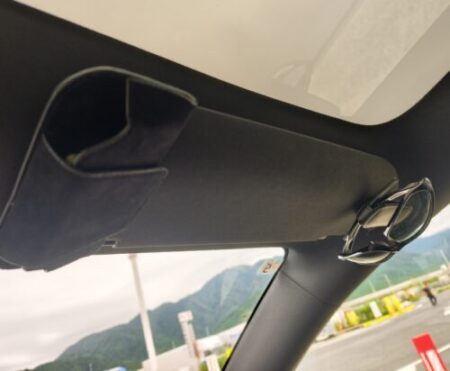
The rear map light that kept switching itself on was still playing up, so Tesla ordered the part in advance and swapped it under warranty during the same visit.
Here is how the whole thing went: booking, drop-off, watching the job progress live in the app, and killing time while the car was in the pit.
Booking is done entirely in the Tesla app chat
Tesla takes service visits by appointment only, and everything happens inside the app.
No phone tag, no walk-in counter. You just send the date and time you want in the chat. It was almost anticlimactically easy.
After a call about the map light, I picked a slot for once the part arrived: Sunday 12 July, 16:00, bundling the repair with the free new car inspection.
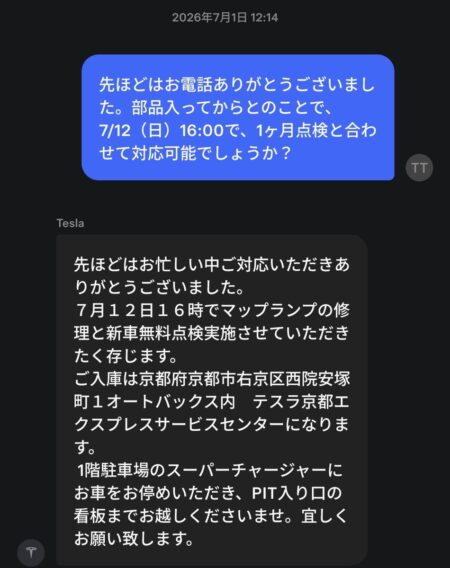
The chat (in Japanese) confirms the appointment: map lamp repair plus the free new car inspection, 12 July at 16:00.
Once you confirm, the app builds an appointment card with the location, the estimated completion time and a cost estimate. The estimate also states that the warranty covers qualifying repairs at no charge, which is reassuring to see up front.
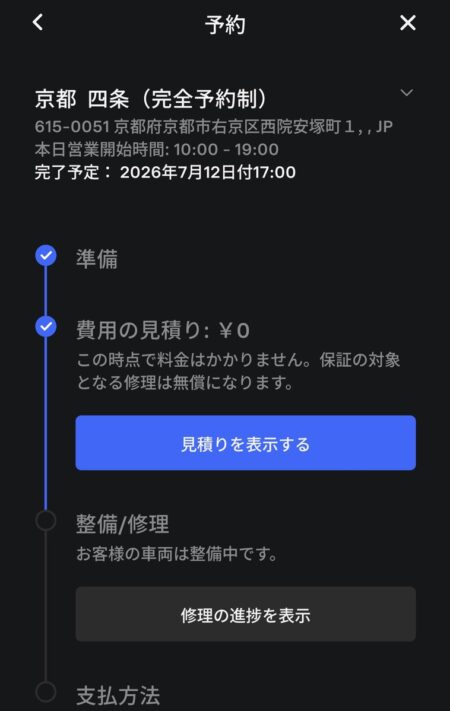
The screen (in Japanese) shows the address, an estimated completion time of 17:00, and a timeline running from preparation through to payment.
The Tesla Kyoto service center sits inside an AUTOBACS building
It is in the Saiin area of Ukyo Ward, Kyoto, on Kadono-oji Street.
The Tesla showroom shares the ground floor of the big APIT AUTOBACS Kyoto Shijo building with a BYD showroom. There is a bookstore and a Starbucks in the same complex, which makes it a surprisingly pleasant place to be stuck for an hour.
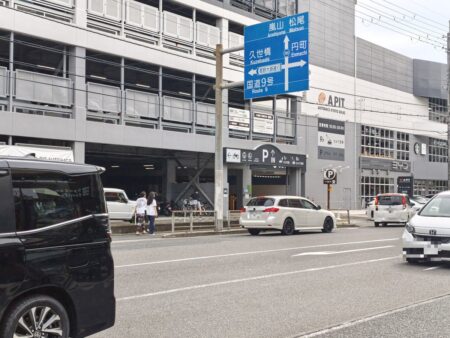
You go in through the car park entrance below. The signs advertise EV charging on the first floor and self-service car washing on the roof.
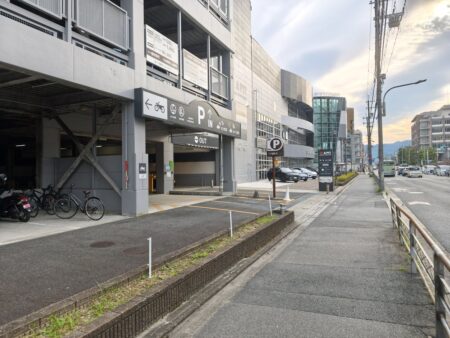
For pick-up, the app chat told me to park at the Supercharger in the ground floor car park and walk to the sign at the pit entrance.
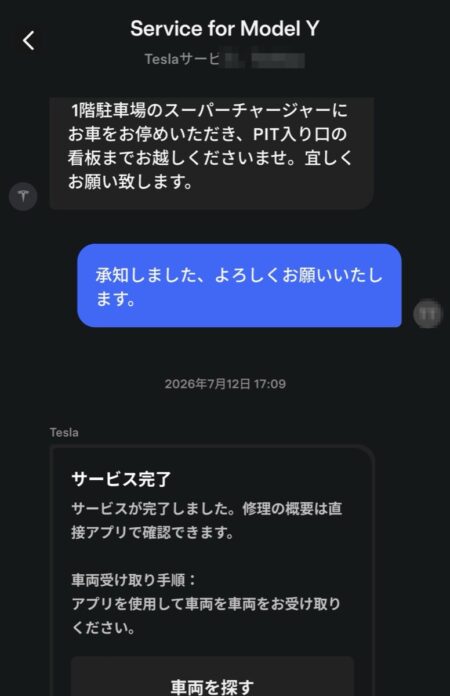
The chat (in Japanese) says the service is finished and asks you to park at the ground floor Supercharger, then come to the sign at the pit entrance.
The car park normally charges ¥200 per 30 minutes, capped at ¥500 on weekdays and ¥1,000 at weekends.
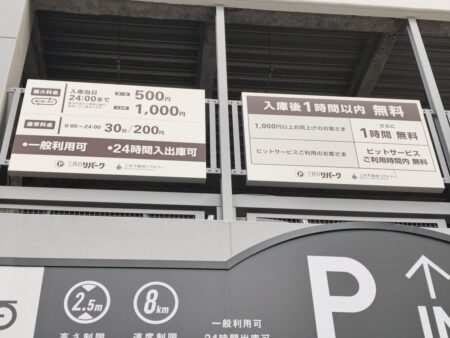
The board is in Japanese: ¥200 (approx. $1.30) per 30 minutes, with a same-day cap of ¥500 (approx. $3.30), or ¥1,000 (approx. $6.60) on weekends and holidays.
For a pit job like mine, the center waives the parking fee entirely. Even if you only shop, you get the first hour free, and spending ¥1,000 or more buys you another hour.
Killing time at the kyoto family mall across the road
The car went in at 16:04 and came out at 17:09, so about an hour in total. They phone you when the car is ready, and you can follow the job in the app in the meantime (more on that below).
There was no loaner car, but that was no problem at all: directly across the road is kyoto family, an AEON shopping mall.
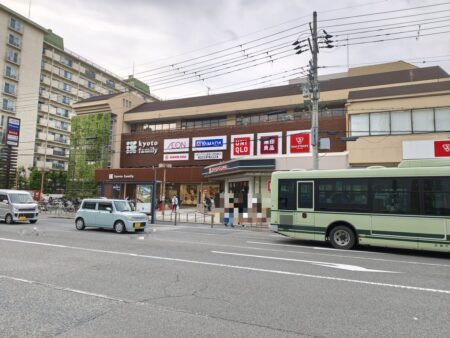
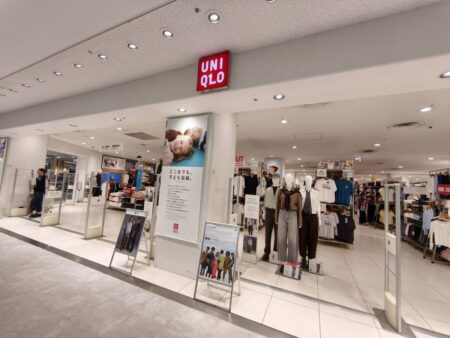
It is on the small side, but it has the full set: AEON, Yamada Denki (electronics), UNIQLO, MUJI, DAISO, 2nd STREET, Burger King and Mister Donut.
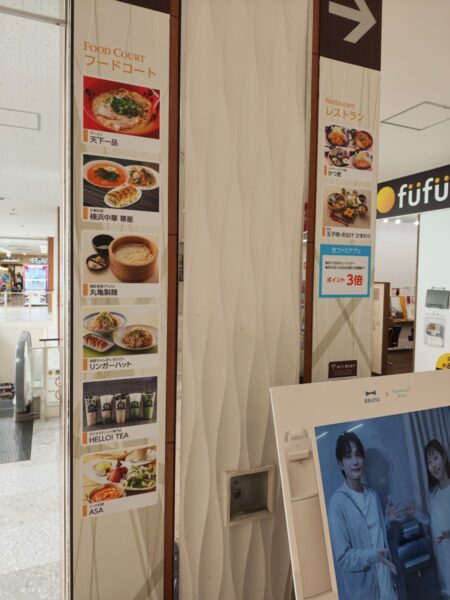
The food court covers ramen, udon, champon and Chinese, and there is a Holly’s Café (a Kyoto local chain) on the third floor.
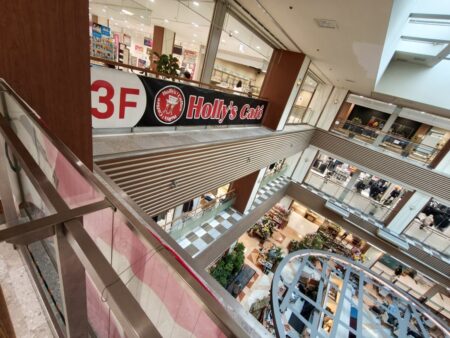
An hour passed easily. If anything, sitting down for a meal would have made it too tight.
Watching the inspection progress live in the app
This was the most entertaining part of the whole visit. As soon as the car is in the pit, the app home screen switches to an in-service state and shows the estimated completion time (17:00 in my case).
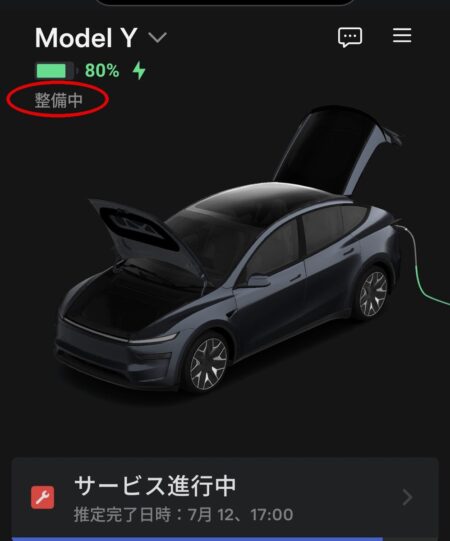
The Japanese text under the car name translates as: In service. Below it: Service in progress, estimated completion 12 July, 17:00.
While that status is active, the app locks out most remote controls. My BYD ATTO 3 let me poke at everything from its app even mid-workshop, so Tesla handling this properly is a nice detail.
Progress bars and the technician’s notes
Open the repair progress view and each job gets its own progress bar. Mine had two items: other interior (map light replacement), plus the free new car inspection. Both showed as in progress while the work was underway.
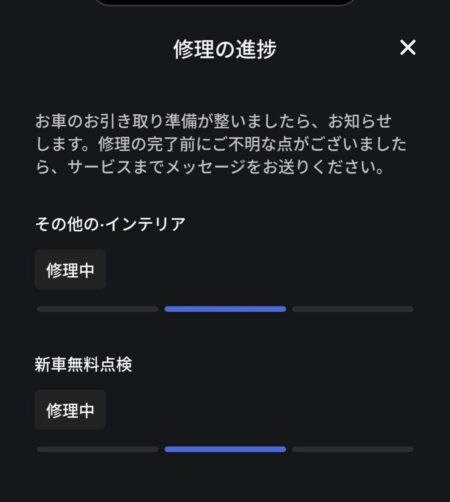
The Japanese labels translate as: map light replacement, free new car inspection — both marked as under repair.
Before long each item flips to resolved, and the technician’s notes open up. That was the genuinely nice bit: the notes spell out every check the free inspection covers.
- Top up the washer fluid
- Check brake fluid and coolant levels
- Check the lights and any alerts
- Assess low-speed behaviour, acceleration and brake feel
- Check and adjust tyre pressures (300 kPa front and rear)
- Torque the wheel nuts to spec
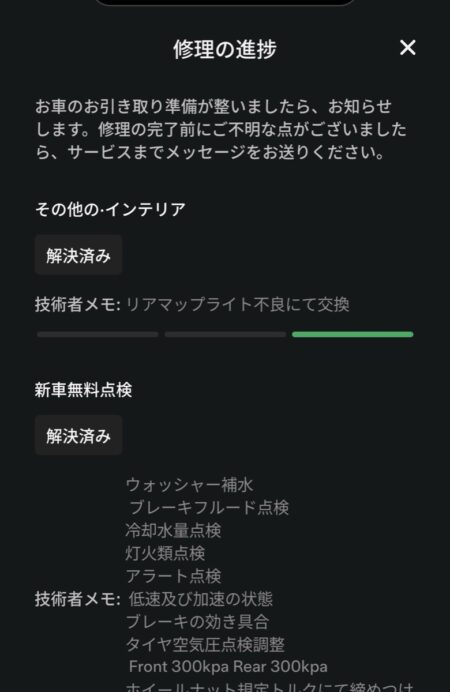
The technician’s notes, in Japanese, list exactly the checks above.
The map light entry simply said the rear map light had failed, so they replaced it.
I do most of my own maintenance, so I find that permanent work log in the app genuinely reassuring. (I would still love to read the remote diagnostics myself, mind you.)
When I collected the car, they had even vacuumed the interior. Squeezing that into a short pit slot was a nice touch.
The bill: ¥0, invoice included
Open the service summary and the total, inspection and warranty repair included, comes to ¥0 paid. The new car warranty plus the free 1-month inspection really do add up to nothing.
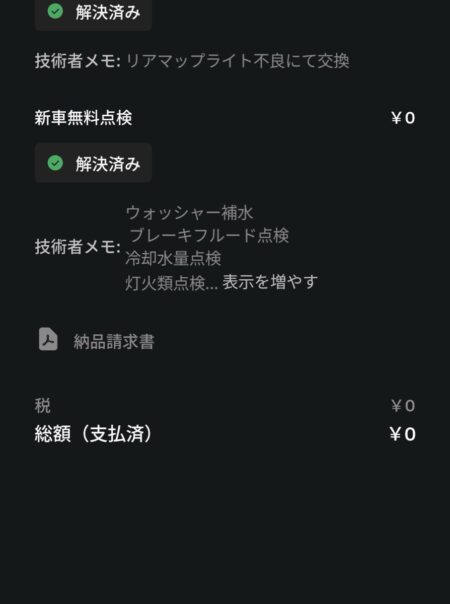
The Japanese summary marks both jobs resolved and shows a total (paid) of ¥0.
The appointment timeline ticks off every step, all the way to payment complete.
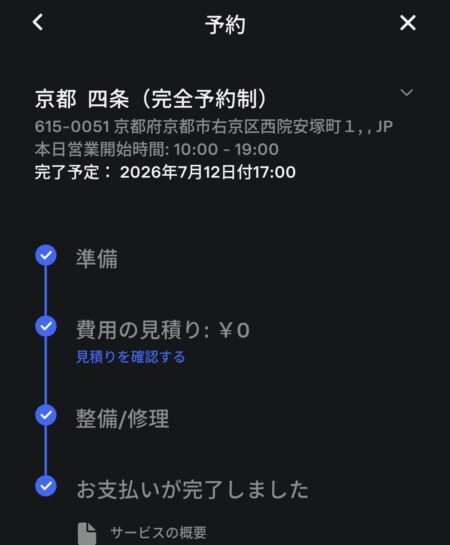
The Japanese timeline runs from preparation through to payment completed, every step ticked.
A few days later the formal invoice appeared in the app for download, carrying a paid stamp and breaking the rear map light replacement out line by line.
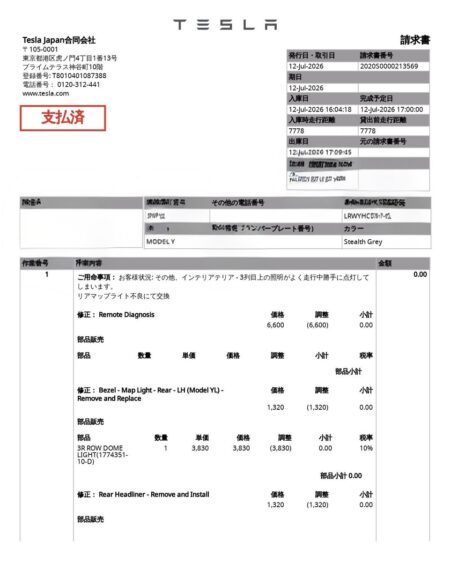
The Japanese invoice carries a paid stamp.
The breakdown is the fun part. The invoice prices every job at list rate (the labour rate is a startling ¥22,000 per hour, roughly $145), then cancels each line with an identical adjustment. Parts, labour and consumption tax all come to zero, and the total lands on exactly ¥0.
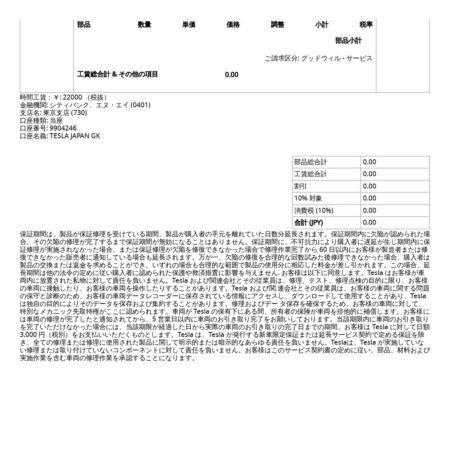
The Japanese invoice shows parts, labour and tax all at 0.00, a total of ¥0.00, and an hourly labour rate of ¥22,000 (approx. $145).
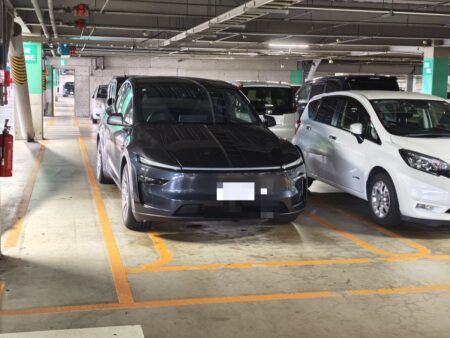
From there I drove on to the AEON Mall in Gojo to finish the shopping, and finally remembered to take a photo of the car in the multi-storey car park.
Summary
My first visit to the Tesla Kyoto service center, in short:
Appointment only: you book and track everything in the app, and they phone you when the car is ready.
You drop off through the APIT building car park entrance and collect at the ground floor Supercharger.
They waive parking for pit work, and the bill for the inspection plus warranty repair came to ¥0.
The mall across the road fills an hour easily, and the car came back vacuumed.
From booking to the live progress bars, the whole system centres on the person waiting rather than the workshop. That kind of thought put into the service experience, not just the car, is very Tesla.
Kyoto Shijo is the closest center to where I live, so I expect to be back.
The map light repaired on this visit did not stay fixed. It came back four days later, then a second visit found fabric pinched under the cover.
This article is also available in Japanese.