A tyre stone remover was not a tool I knew existed. For years, whenever I spotted gravel wedged in a tread groove, I grabbed a flat screwdriver and poked at it until the stone popped out.
Then one turned up on AliExpress for a few hundred yen (roughly $2), so I ordered it on a whim.
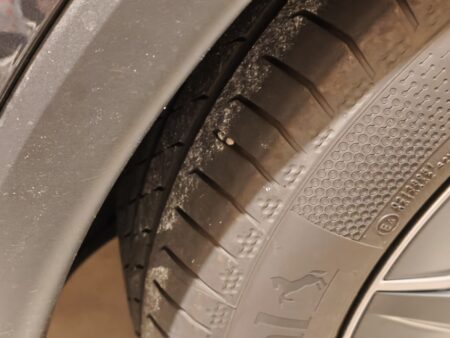
Both of our cars had plenty of grit packed into the grooves, so I worked through the Tesla Model YL first, then the BYD ATTO 3.
What a tyre stone remover actually is
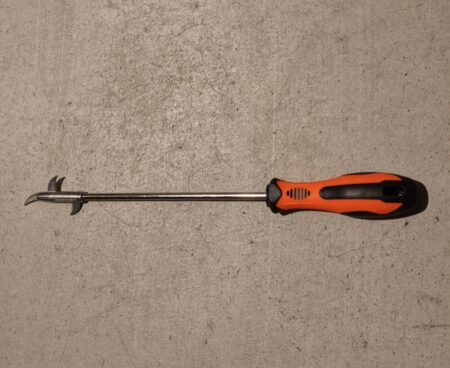
It is a slim steel shaft with a hooked tip, about 28 cm long, finished with a rubber grip shaped like a screwdriver handle.
The hook is the whole point. It slides underneath a stone rather than pressing against it.
Mine came from AliExpress, but the same shape shows up on Amazon in most countries.
Using it is hook, then lever
Walk around the car first and look for stones sitting proud of the tread.
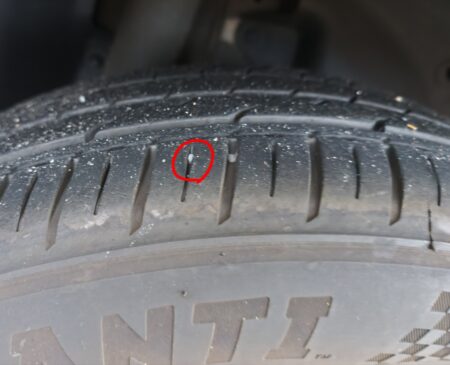
Slip the hook down beside the stone, then lever it upwards. That is the entire technique.
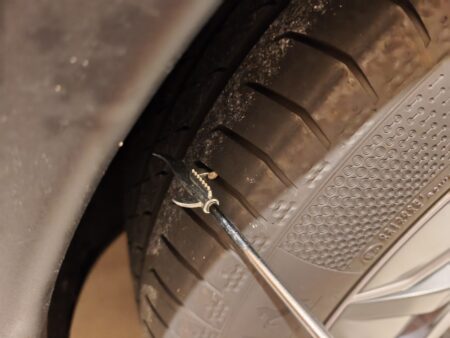
Even stones that have worked their way in deep come out cleanly, because the hook gets underneath them instead of shoving them further down.
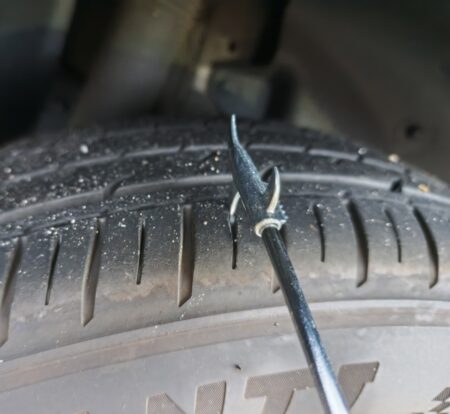
Doing both cars took only a few minutes. Stones kept popping out one after another, which made it oddly satisfying work.
Why it beats a flat screwdriver
A screwdriver does get stones out. I used one for years without complaint.
Side by side, though, the amount of force you need is completely different.
A screwdriver tip is straight, so you end up pushing the stone. Sometimes it goes in deeper before it finally comes free.
The hooked tool lifts from below, so the stone releases almost on its own.
Less force also means less chance of nicking the rubber, or of the tool skating off the tread onto the wheel face.
Worth doing more often than I have been
Trapped grit is not only a noise problem. It sits there working its way deeper every time the tyre rolls.
Looking closely at the tread is also how you find the nail you would otherwise discover as a flat tyre a week later. Safety groups such as TyreSafe in the UK campaign for exactly this kind of regular visual check.
For the price of a coffee, keeping one of these in the boot makes sense.
Where to buy one
I bought mine here:
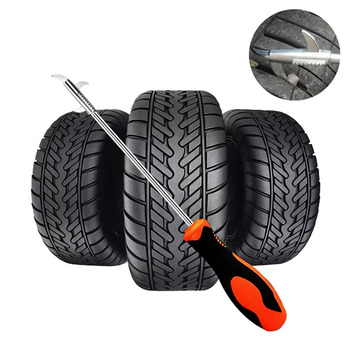
If you would rather have it in a couple of days, the identical hooked tool is sold on Amazon in most countries. Searching for a tread stone hook brings it up.
Wrapping up
A tyre stone remover is a single-purpose tool that costs almost nothing, which is usually a bad combination. This one earns its place.
- The hook lifts stones out instead of driving them in
- Far less force than a flat screwdriver
- Lower risk of damaging the tread rubber or the wheel
- Cheap enough to keep one in every car
Tread grooves are the maintenance job that gets skipped entirely. Washing gets done on a schedule, coating gets booked in, tyre grooves just get ignored.
From now on I will check the treads every time I wash the car, before they start clicking on the tarmac.
Watching the tread is part of the same habit as watching the road surface itself — I wrote about dodging a plank on the motorway in the Model YL earlier this summer.



This article is also available in Japanese.